August 26, 2026
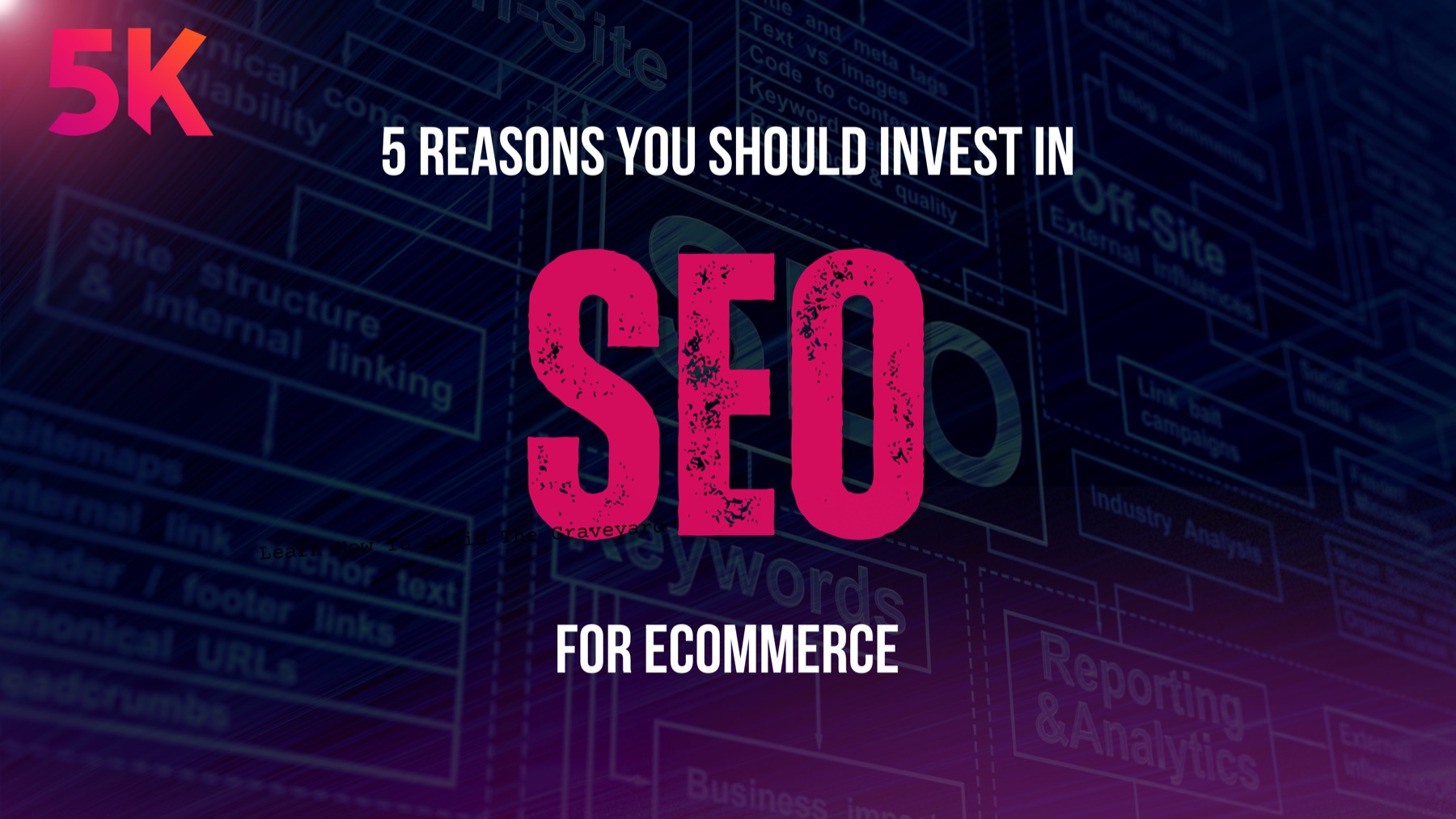
5 Reasons You Should Invest in SEO Services for Ecommerce
SEO builds trust, costs less than ads over time, and reaches shoppers with real buying intent. Here's why ecommerce brands invest in SEO in 2026, plus a practical checklist to get started.
Word-of-mouth built your first customers. Paid ads can bring in the next batch. Neither one is enough to carry an ecommerce business on its own, and your competitors already know it. Most of them are investing in SEO right now, whether or not it shows up in their marketing.
Search engine optimization is how an ecommerce brand grows a channel that keeps sending buyers to product and category pages without a cost-per-click attached to every visit. Done well, it also does something paid traffic can't: it builds trust before a shopper ever lands on your site. Here are five reasons to invest in it, what it actually costs compared to ads, and a practical checklist to start with.
1. It Builds Trust
Shoppers assume a site ranking near the top of search results is qualified to be there. That assumption isn't always fair, but it's how people behave, and it works in your favor once you've earned the ranking. A page that ranks well usually got there through well-written, genuinely useful content and links from other sites in your industry, both of which read as credibility signals to a buyer who has never heard of you before. A customer comparing three unfamiliar ecommerce sites is more likely to trust the one search engines already vouched for.
2. It's Cost-Effective Compared to Paid Ads
Paid search works, but every click costs money for as long as the campaign runs. Organic rankings keep sending traffic after the work is done, which changes the math over time.
Here's a real example. Ultra Bright Lightz, an ecommerce retailer of emergency vehicle lighting, ranks #2 organically for "amber light," a term searched about 2,400 times a month. That ranking earns the site roughly 200 free organic clicks a month on that keyword alone. The comparable paid cost for that exact term currently runs $0.82 for a broad-match click. Buying that same traffic through ads would cost around $164 a month, close to $2,000 a year, and that's a single keyword out of dozens the site ranks for. Organic traffic doesn't erase your ad budget, but it steadily lowers your blended cost per visitor the longer it compounds.
3. It Captures Higher Purchase Intent
Someone scrolling social media is browsing. Someone typing a product name into a search bar is looking for something specific, often with a credit card already in hand. That's the core advantage of search traffic over most other channels: the visitor showed up because they're actively seeking a product like yours, not because an ad interrupted something else they were doing.
4. It Creates a Better User Experience
The technical side of SEO and the customer experience side aren't separate projects, they're the same project. Search engines weigh page speed, mobile usability, and clean navigation because those are the same things that make a site frustrating or easy to buy from. Fixing slow load times, removing intrusive pop-ups, and cleaning up confusing URL structures earns better rankings and a store people don't abandon halfway through checkout.
5. It Gets You More Customers, Consistently
Put the first four reasons together and the outcome is straightforward: more visibility for the right searches, traffic that costs less over time, visitors who already want what you sell, and a site that's easy to buy from once they arrive. Paired with solid on-site conversion practices, that combination is what turns SEO from a visibility project into a revenue channel.
Where Ecommerce SEO Actually Shows Up
Ecommerce SEO isn't one page, it's the structure of the whole store. A few places it matters most:
Category pages. These pages target the broader, higher-volume searches ("amber warning lights," not "amber warning light model 4022") and are usually the entry point for shoppers who haven't picked a specific product yet. Category page SEO means clear, unique copy, logical filtering, and internal links down to the products inside it.
Product pages. These target more specific, higher-intent searches and are where the sale actually closes. Unique product descriptions, real customer reviews, and structured data (so search engines can show price and availability directly in results) all belong here.
Site structure. A shopper and a search engine both need to get from homepage to category to product in a few clicks, with a URL structure that makes sense. Sites that bolt on new categories without a plan tend to end up with duplicate or orphaned pages that dilute the ranking strength of the pages that matter.
The platform you're on. If your store runs on Shopify, and a large share of ecommerce sites do, there's a specific set of SEO considerations around app bloat, duplicate collection URLs, and theme speed that a generic SEO checklist won't catch. Shopify SEO is a large enough topic on its own to search separately, and it's worth doing before you assume a general SEO plan will cover it.
An Ecommerce SEO Checklist to Start With
- Run a technical audit first. Broken links, duplicate pages, slow load speed, and missing redirects will hold back everything built on top of them.
- Do keyword research at the category and product level, not just for the homepage. Every category and every product line has its own set of searches worth targeting.
- Write unique copy for category and product pages. Manufacturer descriptions copied across dozens of retailer sites don't rank and don't differentiate you.
- Fix your site structure so categories, subcategories, and products connect through a logical, crawlable path.
- Build links from real sites in your industry, not link farms. A handful of relevant, earned links outperforms a large volume of low-quality ones.
- Track rankings and traffic by page type, not just as one blended number, so you can see whether category pages, product pages, or blog content is doing the work.
How Much Does Ecommerce SEO Cost?
Cost varies with the size of your catalog, how competitive your category is, and how much technical work the site needs before new content can even take effect. A small store with a clean, modern platform and a handful of product lines costs less to optimize than a large catalog with years of technical debt and heavy competition. What stays consistent is the trade-off from reason #2 above: the cost is front-loaded, and the return compounds the longer the program runs, unlike paid ads, where the cost resets every month regardless of what came before. Working with an ecommerce SEO agency that scopes the plan around your actual catalog, rather than a flat monthly package, is the more reliable way to know what you're paying for.
Frequently Asked Questions
Is SEO worth it for a small ecommerce store?
Yes, often more so than for a large one. Smaller catalogs can target more specific, lower-competition terms and see movement faster than a large retailer competing on broad, crowded categories.
How is ecommerce SEO different from regular SEO?
The core principles are the same, but ecommerce sites add product and category page structure, inventory-driven content that changes over time, and platform-specific issues (like Shopify's collection and variant URLs) that a standard business website doesn't have to deal with.
Do I need to hire an ecommerce SEO consultant or agency, or can I do this myself?
A technically clean, well-organized store with a few product lines can handle a lot of this in-house. A large catalog, a competitive category, or a site with existing technical debt usually benefits from outside expertise, if only to avoid redoing the same work twice.
How long before ecommerce SEO pays off?
[Google's own public guidance](https://searchengineland.com/guide/how-long-does-seo-take-to-work) puts the typical window at four months to a year before the benefit becomes visible, with the exact timing depending on your site's starting condition and how competitive your category is.
Ready to Turn Search Into a Revenue Channel?
If you want an ecommerce SEO plan built around your actual catalog and category, not a generic package, see what our SEO team offers or get in touch to start the conversation.
Sources
Search Engine Land, "How long does SEO take to work? SEO timeline & results explained", citing Google's Maile Ohye: "In most cases, the SEO will need four months to a year to help your business first implement improvements and then see the potential benefit." Accessed August 26, 2026.

5K Team
Our team helps companies to increase revenue, decrease costs, increase efficiency, and scale employees using digital marketing and AI technology.