June 5, 2026
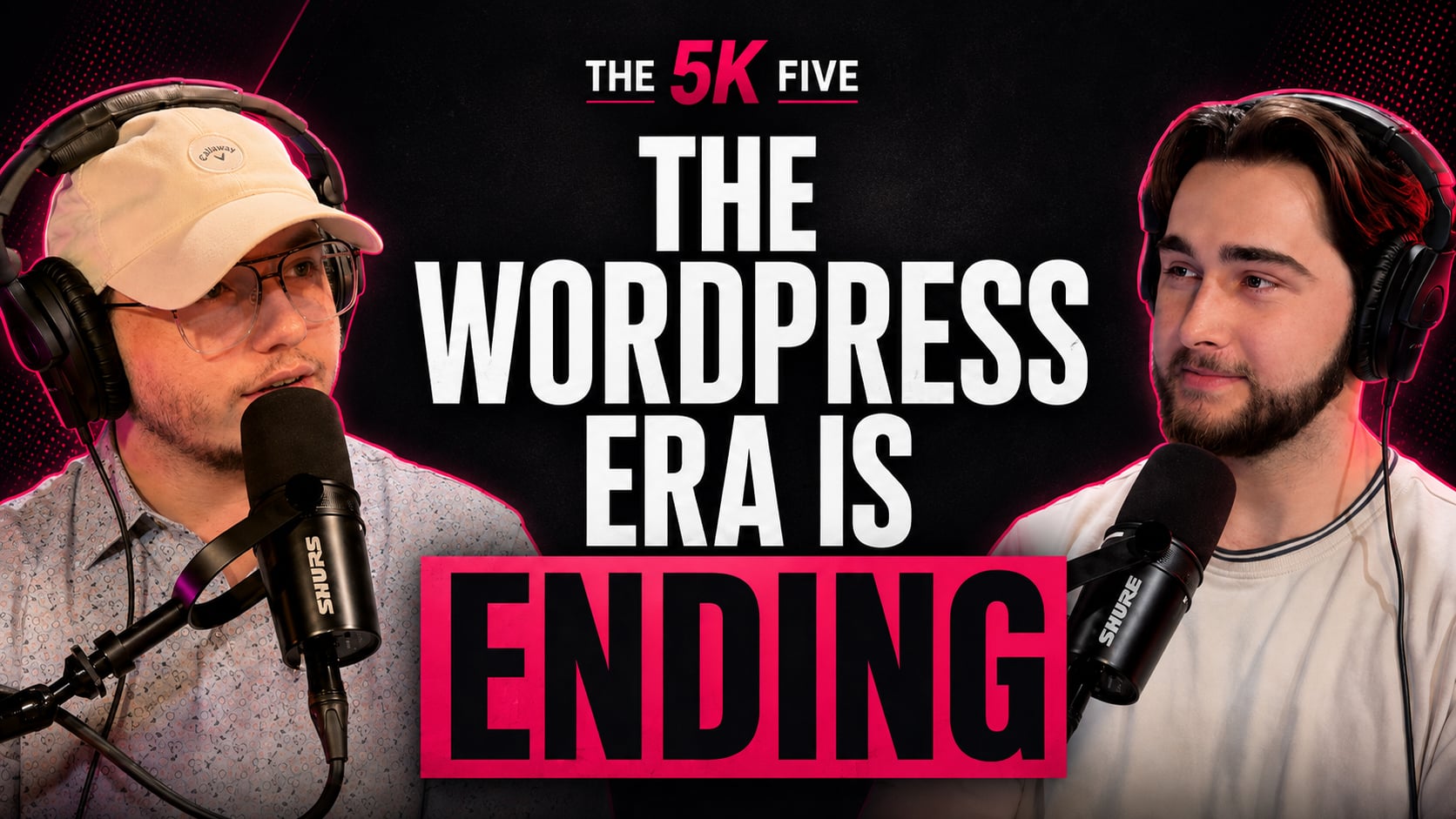
WordPress Is Starting To Crack Under The Weight Of Modern Business
Many companies are rethinking WordPress as websites become more critical to speed, security, scalability, and growth. Here is what CEOs should know.
The Website Platform Nobody Wants To Question
For years, WordPress has been the safe choice. It is familiar, widely used, and easy for most teams to understand. Marketing teams know how to publish a blog post. Business owners know how to update a page. Developers know how to install plugins, adjust templates, and keep the site moving.
That familiarity is exactly why so many companies still rely on it. But familiar does not always mean best. As businesses grow, the website is expected to do more than sit online and look professional. It has to support revenue, performance, lead generation, content, analytics, security, user experience, and sometimes even internal operations.
That is where the cracks start to show. WordPress may still be a good fit for simple websites, but for companies trying to scale, move faster, and create a better digital experience, it is becoming harder to ignore the limitations.
WordPress Won Because It Was Convenient
WordPress became dominant for a reason. It made websites easier. A company did not need to custom-code every single update, and a marketing team could publish content without waiting on a developer for every small change. That convenience changed the internet.
It gave small businesses, bloggers, startups, and growing companies a practical way to build and manage websites without massive budgets or long development timelines. If a company needed a new feature, there was probably a plugin for it. If it needed a new design, there was probably a template for it.
But convenience has a ceiling. The same things that made WordPress useful in the beginning can start to slow a company down later. Plugins, templates, themes, page builders, updates, and third-party dependencies are helpful until they become the reason the website is bloated, fragile, slow, or difficult to customize.
The Plugin Stack Is A Quiet Liability
Most WordPress websites are not one clean system. They are a stack of plugins layered on top of each other. One plugin handles forms. Another handles SEO. Another handles page building. Another handles redirects. Another handles caching. Another handles security. Another handles image compression, popups, analytics, custom fields, or backups.
Then the business grows, the site gets more complex, and more plugins get added. Eventually, the website depends on a long list of third-party tools that all need to keep working together. That is where the risk starts.
A plugin can slow the site down. A plugin can conflict with another plugin. A plugin can stop being supported. A plugin can break after an update. A plugin can create a security vulnerability. For a basic website, that may be manageable. For a company that depends on its website for leads, sales, recruiting, customer trust, or digital operations, it becomes a serious business issue.
Slow Websites Kill Momentum Before The Sales Team Gets A Chance
Website speed is not just a technical detail. It affects how people experience the company. A slow website creates doubt, makes the business feel less polished, frustrates users, weakens paid traffic performance, and can reduce conversions before anyone ever fills out a form or books a call.
WordPress websites can be made fast, but keeping them fast often requires constant work. Teams may need better hosting, caching plugins, image optimization, code cleanup, plugin audits, database maintenance, and performance monitoring. That is a lot of effort just to fight the weight of the system.
Custom-coded websites can start from a cleaner foundation. Instead of adding a plugin for every function, developers can build only what the site actually needs. Less unnecessary code usually means faster performance, fewer dependencies, and a better experience for users. For CEOs, the point is simple: speed is not about impressing developers. It is about removing friction from the buyer journey.
Security Gets Harder When Too Many People Touch The Code
WordPress is a major target because it is everywhere. That does not mean every WordPress website is insecure. A well-maintained WordPress site can be secure. The broader issue is that WordPress sites often rely on multiple plugins, themes, user accounts, hosting environments, and third-party tools. Every one of those pieces has to be maintained correctly.
If one plugin has a vulnerability, the site can be exposed. If an update is skipped, the risk grows. If an update is rushed, something can break. If the site has too many moving pieces, it becomes harder to know where the problem started.
Custom-coded websites can reduce some of that exposure by limiting unnecessary dependencies and giving developers more control over the structure of the site. For companies where trust matters, this is not a small issue. A website is part of the company's credibility, and it should not be held together by a pile of tools no one fully understands.
Templates Make Fast Websites, But Not Always Smart Ones
Templates are useful because they help companies launch quickly, keep costs down, and create structure when a business does not need anything complex. For basic websites, that can be a perfectly reasonable tradeoff.
But templates also force decisions. They influence the navigation, layout, page structure, user flow, and design system. Some changes are easy. Others are difficult. Some are nearly impossible without heavy workarounds.
That matters because a website should be built around the buyer, not around the limitations of a template. A company may need a specific lead flow, a custom product experience, a more strategic service page, a different content structure, or a stronger conversion path. If the template cannot support that, the company either compromises or pays to fight against the system. That is when the website starts working against growth instead of supporting it.
The Old Argument Against Custom Websites Is Getting Weaker
For a long time, the case against custom websites was simple. They took too long, cost too much, were hard to manage, and required developers for every change. That used to be a fair concern.
But custom development has changed. Modern frameworks, cleaner development workflows, better hosting, flexible content management systems, reusable components, and AI-assisted coding have made custom websites more practical than they used to be.
Custom still requires skill, planning, and a team that knows what it is doing. But the old assumption that WordPress is always the fast, affordable option and custom development is always slow and expensive is no longer accurate. Companies now have more options, which means leadership teams should make the website decision based on long-term fit, not old assumptions.
You Do Not Need WordPress To Let Your Team Edit The Website
One of the strongest reasons companies stay with WordPress is content control. Marketing teams need to publish blogs. Sales teams need updated service pages. Leadership may want new messaging. HR may need recruiting pages. The business needs the ability to move without waiting on a developer for every small change.
That is completely reasonable, but WordPress is not the only way to solve that problem. Modern content management systems can connect to custom-coded websites. That means a company can have a fast, flexible, custom site while still giving non-technical users the ability to update content.
The developer gets cleaner code. The marketing team gets control. The business gets a better foundation. This is one of the biggest reasons more companies are willing to look beyond WordPress.
WordPress Is Fine Until It Starts Making The Rules
WordPress can still be the right choice. If a company needs a simple website, has a limited budget, wants to publish basic content, and does not require much customization, WordPress may be a smart and practical option.
The problem is not using WordPress. The problem is letting WordPress dictate what the website can become. When the business needs more speed, more flexibility, more control, more security, or more custom functionality, the platform should not be the thing holding it back.
At some point, the company has to ask whether it is building the website it actually wants or just building the website WordPress will allow.
The Website Should Fit The Business, Not The Other Way Around
A website platform should be chosen based on business needs, not habit, convenience, or the fact that "this is what we have always used." The platform should support where the company is going, not just where it has been.
Leadership teams should be asking practical questions:
- How important is website speed to our sales and marketing performance?
- How much custom functionality do we need?
- How much control do we want over design and user experience?
- How much risk are we carrying through plugins and third-party tools?
- How often does our team need to update content?
- How much will this site need to evolve over the next few years?
- Will this platform still make sense if the company doubles in size?
These questions are more useful than debating whether WordPress is good or bad. The real issue is whether the platform supports the direction of the business.
Growth Exposes Weak Foundations
A basic website can survive on a basic platform. A growing company usually cannot. Growth puts pressure on everything: more traffic, more content, more campaigns, more integrations, more landing pages, more tracking, more security needs, and more departments depending on the website.
What worked when the company was smaller may not work when the website becomes central to revenue and operations. That is why some companies are moving beyond WordPress.
Not because WordPress never works, but because growth exposes the weaknesses that were easy to ignore before.
The Real Takeaway For CEOs
WordPress is not dead, but the idea that WordPress should be the automatic default for every business website is outdated. For simple websites, it can still be a good option. For companies that need speed, security, flexibility, custom user experiences, and room to scale, it may be time to look at a different foundation.
The website is too important to be treated like a template with plugins attached. It should be a business asset that supports growth, protects trust, and gives the company room to evolve.
If the platform cannot do that, the business should not be afraid to move on.
5K Team
Our team helps companies to increase revenue, decrease costs, increase efficiency, and scale employees using digital marketing and AI technology.
Tags
Ready to Grow Your Business?
SCHEDULE A GROWTH STRATEGY SESSIONMost Recent Articles

The PPC Audit Most Companies Never Get: What a Real One Includes and How Long It Should Take
October 7, 2026
Read More

Two Agencies, One Sale: How to Split SEO and PPC Without Paying Twice for the Same Customer
October 7, 2026
Read More

5 Questions to Ask Your PPC Agency: How to Tell a Real Answer From a Polished Dodge
October 7, 2026
Read More