

Blog
June 17, 2026
The AI Pilot Graveyard: Why Your Experiments Keep Dying Before They Go Live
Every company running AI experiments right now has the same problem: a growing list of initiatives that technically worked, and a much shorter list of ones that are actually used every day.
Every company running AI experiments right now has the same problem: a growing list of initiatives that technically worked, and a much shorter list of ones that are actually used every day.
The AI Pilot Graveyard is real, and it is filling up fast. With ideas that showed promise, proved a point, got a thumbs-up in the demo, and then quietly disappeared into the org chart. If you have approved AI budget in the last eighteen months and are still waiting to see it show up in operations, this is probably why.
The Pattern Is Predictable
The path to the graveyard follows a familiar sequence. A team identifies a use case: automating part of the quoting process, speeding up customer follow-up, cleaning up a reporting workflow. A vendor is selected or an internal tool is built. A small group runs the pilot. The numbers look promising, or at least not discouraging. The team presents the results. Leadership approves next steps. And then the next steps take six months, lose their sponsor, get deprioritized, and disappear.

The technology was rarely the problem. McKinsey's annual State of AI research consistently finds that most companies are now running AI experiments in multiple business functions, but far fewer report generating sustained, measurable value from them. The Conference Board's most recent CEO research identifies AI ROI measurement as one of the top concerns on executive agendas in 2026, precisely because most companies cannot connect their spend to a clear outcome.
The problem is almost never the AI itself. The problem is three conditions that determine whether a pilot survives long enough to become a workflow.
Condition One: Nobody Actually Owns It
The most common reason a pilot stalls is that nobody is responsible for making it a daily routine. An internal champion volunteers. A vendor takes the lead on setup. A steering committee approves the concept. When it works in a controlled environment, everyone is pleased. When it needs to be embedded into an actual team's actual routine, that requires someone to wake up every morning thinking about adoption, training, process change, and whether it is working as measured by a real business metric. In most companies, that person does not exist.
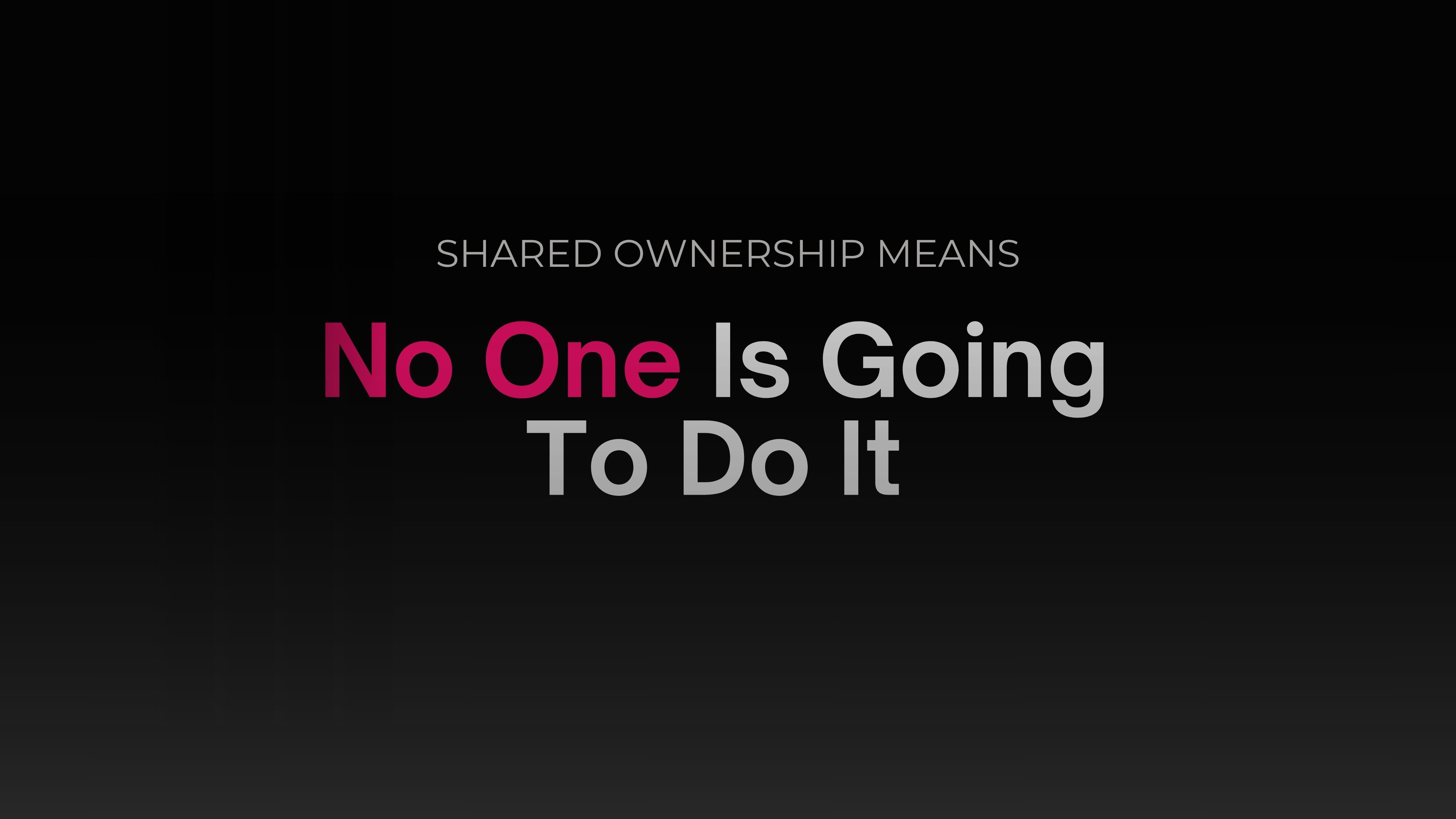
Shared accountability is the same as no accountability. Our CEO, Dave Conklin, reminds us of this constantly. If the AI initiative is a collective project with no single owner and no specific outcome they are being measured on, the pilot will eventually lose to someone's higher-priority day job. That is not a technology problem. It is an accountability structure problem.
This is the condition behind one of the most common things executive teams report right now: nobody in the company officially owns the AI strategy, so every department is running its own experiments, nobody is connecting them to a business outcome, and nothing is scaling. The experiments keep running. The results keep being inconclusive. The budget keeps getting approved. The workflows never change.
Condition Two: There Is No Process Bridge
A pilot that succeeds in isolation almost always fails in deployment, because deployment requires behavior change that the pilot was never designed to create.
Think about what most pilots actually test: whether AI can produce a useful output in a controlled environment. That is a reasonable question. It is a much narrower question than whether your actual team will use that output as part of their actual daily workflow, consistently, without being asked or reminded.
The gap between those two questions is the process bridge. It is the set of decisions about how the AI output connects to an existing workflow, who triggers it, who reviews it, what happens when it produces a wrong answer, and what changes in the team's routine to make this work at scale. Most pilots never build the bridge. They prove the concept and hand it to operations, which treats it like a new tool to be integrated rather than a process to be redesigned around different inputs and outputs.
Harvard Business Review has documented this pattern extensively: the difference between AI deployments that scale and AI deployments that stall is almost always a process design decision, not a technology capability gap. The AI was capable. The workflow was never actually rebuilt around it.
Condition Three: AI on Top of a Broken Foundation
The third condition is the most expensive one. It is also the one most executives never see coming.
AI amplifies what is already there. If your quoting process is disorganized, an AI-assisted quoting tool will produce disorganized outputs at a faster rate. If your CRM data is incomplete, an AI trained on that CRM will give you incomplete answers with false confidence attached. If your customer follow-up is inconsistent, an AI-managed follow-up sequence will make that inconsistency visible at scale, in front of customers.
The expectation going into most pilots is that AI will clean things up. It does the opposite. It exposes every crack in the underlying process, usually at a moment that creates friction with the team that was supposed to benefit from it.
The companies that successfully scale AI almost always audit the process first. They ask a simple question: is the workflow this AI will touch already running well enough that acceleration is the only variable missing?
If the answer is no, they fix the process before introducing the AI. That sequencing is the single strongest predictor of whether a pilot reaches daily workflow or ends up in the graveyard. This same principle drives how we approach AI and automation work with clients: start with what is working, then build the leverage on top of it. We look at the headcount and capacity side of the same pattern in our piece on growing profit without growing overhead.
What This Actually Costs
The license fees are the smallest part. A SaaS subscription is a rounding error compared to the real cost: the salary hours of the people who ran a pilot that produced nothing usable, the leadership attention diverted from initiatives that would have moved, the team disruption created by a rollout that stalled, and the opportunity cost of deploying resources against the wrong problem.
The cost that compounds most is AI fatigue. When pilots keep failing, the organization learns to be skeptical of the next one. The CEO who wants to move on AI in the next planning cycle is now working against the internal memory of two or three things that went nowhere. Future adoption gets harder and resistance calcifies. That is a strategic cost that is very difficult to reverse, and it often shows up as a six-to-twelve-month delay on the initiative that would have actually paid off.
What the Survivors Get Right
The companies that turn AI pilots into real workflows share three habits.
- They define what "working" means before the pilot starts, with a specific metric and a specific date attached.
- They assign one person who owns the outcome, not just the experiment.
- They start with a use case that sits on top of a process that already works, where the AI's job is to accelerate something good rather than rescue something broken.
That is a different framing than most AI conversations produce. It is less about which tool to buy and more about sequencing, ownership, and process readiness before the technology is ever introduced. It is also significantly less expensive than running another pilot and watching it land in the same place as the last three.
Our growth strategy services and automation practice are built around exactly this kind of sequencing work. We help executive teams identify the AI opportunities that are actually positioned to reach daily workflow, map the process gaps that need to be closed first, and assign clear ownership before anything goes into a pilot. If you want to see where your current initiatives stand and what it would take to move the ones worth saving, schedule a growth strategy session with our team.
5K Team
Our team helps companies to increase revenue, decrease costs, increase efficiency, and scale employees using digital marketing and AI technology.
Tags
Ready to Grow Your Business?
SCHEDULE A GROWTH STRATEGY SESSIONMost Recent Articles

The PPC Audit Most Companies Never Get: What a Real One Includes and How Long It Should Take
October 7, 2026
Read More

Two Agencies, One Sale: How to Split SEO and PPC Without Paying Twice for the Same Customer
October 7, 2026
Read More

5 Questions to Ask Your PPC Agency: How to Tell a Real Answer From a Polished Dodge
October 7, 2026
Read More