
June 30, 2026
Why Quarterly Team Meetings Matter More Than Most Companies Think
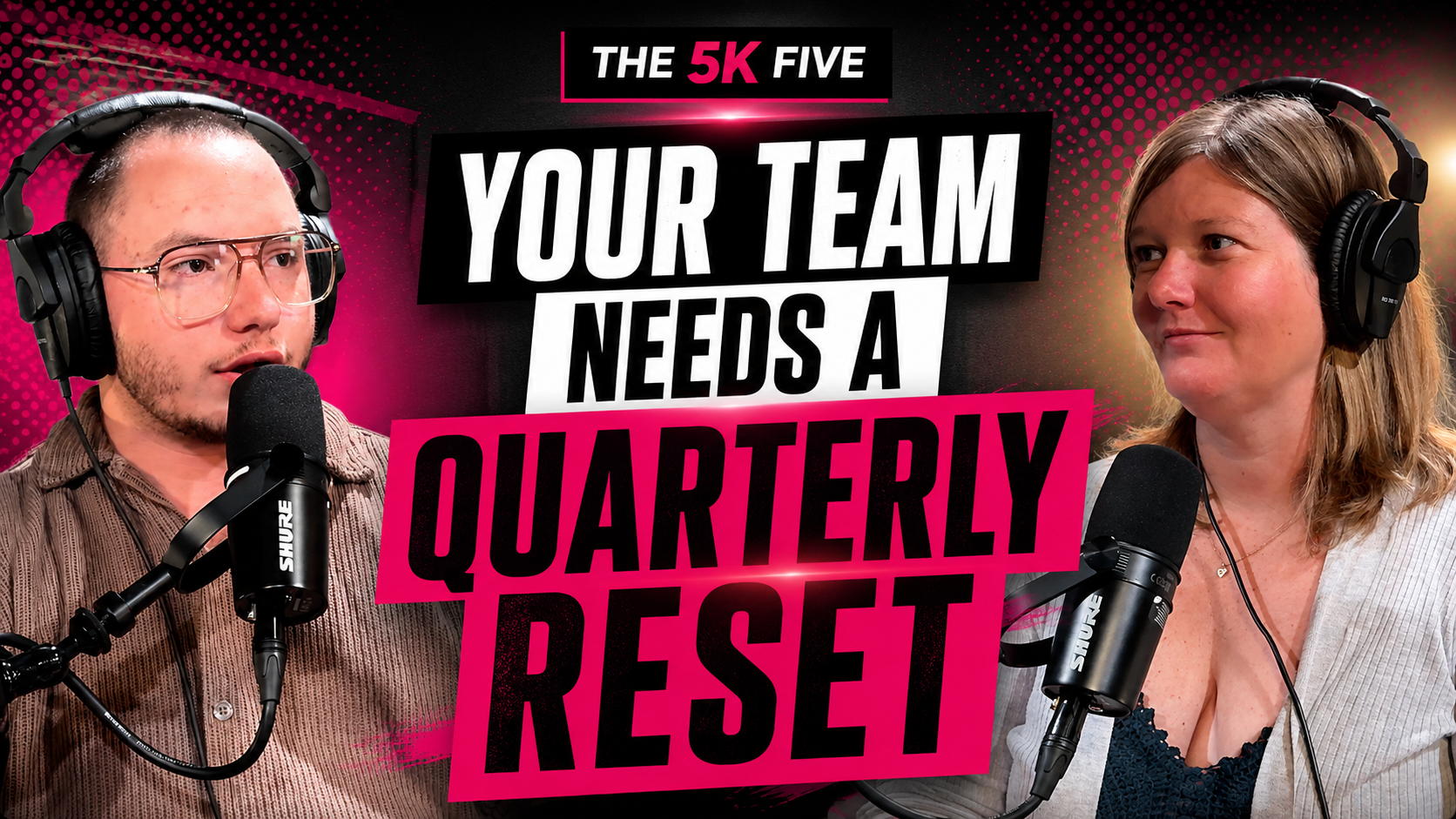
Quarterly team meetings help businesses reset priorities, improve alignment, strengthen culture, and turn big-picture goals into focused action for the next quarter.
The Meeting That Resets The Quarter
Most companies have meetings because the calendar says they should.
The better companies use meetings to reset direction.
A quarterly team meeting should not feel like a longer version of a weekly check-in. It should be a chance to step away from the daily noise, look at where the business has been, get honest about where it is going, and decide what actually matters next.
That is the difference between another meeting and a real company reset.
At 5K, our quarterly meetings are built around alignment, reflection, team development, and focused priorities. The goal is not to fill a day with slides. The goal is to give the team enough clarity that the next quarter feels less reactive and more intentional.
A Quarterly Meeting Should Bring The Business Back Into Focus
Every team gets pulled into the weeds.
Client work, deadlines, internal projects, sales conversations, creative reviews, reporting, and daily problem solving all compete for attention. That is normal. It is also why teams need a rhythm that forces everyone to zoom back out.
A strong quarterly meeting creates space to answer bigger questions:
- Where are we as a company right now?
- What did we learn from the last quarter?
- What is changing in the market, the team, or the business?
- What are we building toward next?
- What does each person need to own?
Those questions matter because alignment does not happen automatically. Even on a small team, people can drift into different versions of the same goal. A quarterly meeting gives everyone the same picture at the same time.
Comfort Creates Better Conversation
The room matters more than people think.
A quarterly meeting does not need to feel stiff, corporate, or overly formal to be effective. In fact, the more comfortable the setting, the more likely people are to actually share what they are thinking.
That does not mean the meeting should be casual in a careless way. It means the environment should make people feel safe enough to contribute. When people are relaxed, they are more willing to speak honestly, ask questions, challenge assumptions, and share ideas that might not come out in a traditional boardroom setting.
That is especially important for younger team members or people who have not been in as many leadership-style conversations. Some of the best ideas in a company come from the people closest to the work, but those ideas only surface when the meeting is designed to include them.
One Clear Rock Is Better Than Three Weak Ones
One of the most important parts of a quarterly meeting is deciding what each person is going to focus on next.
A lot of companies call these priorities "rocks." The idea is simple: each person identifies a meaningful goal to complete during the next quarter.
The mistake is giving everyone too many.
When someone has two or three rocks on top of their normal workload, the priorities can start to feel like extra homework instead of real business drivers. The more rocks there are, the more likely some of them become filler. They sound productive, but they are not tied tightly enough to impact.
A better approach is to choose one rock that matters.
One focused priority gives each person something they can truly own. It also makes it easier for the team to discuss whether that goal is relevant, realistic, measurable, and connected to where the company is trying to go.
The point is not to fill a table. The point is to move the business.
Culture Is Built Into The Meeting, Not Added Later
A quarterly meeting should include real business conversation, but it should also include moments that build the team.
That can be simple. Icebreakers, team games, quick creative exercises, funny awards, or low-pressure activities can help people reset between heavier conversations. Those moments are not a distraction from the meeting. When done well, they make the meeting better.
People can only stay locked into serious planning for so long. Giving the team a chance to laugh, breathe, and interact in a different way helps reset attention. It also reminds everyone that the company is made of real people, not just roles, metrics, and responsibilities.
Culture is not built by saying "we have a great culture." It is built in the way people experience the company when they are together.
Keep Big-Picture Meetings Out Of The Weeds
Quarterly meetings should make room for issues, but not every issue deserves the full group's time.
This is where meetings can lose momentum. Someone brings up a real problem, the discussion gets specific, and suddenly the whole room is pulled into a conversation that only involves two or three people.
That does not mean the issue is unimportant. It means it may not belong in that moment.
A useful structure is to identify, discuss, and solve when the issue is relevant to the full group. If the conversation becomes too narrow, table it and assign the right people to solve it separately.
The quarterly meeting should stay focused on the big picture. The best use of the room is alignment, clarity, and decisions that affect the team as a whole.
The Best Quarterly Meetings Create Momentum After The Meeting Ends
The real value of a quarterly meeting is not what happens during the meeting.
It is what changes afterward.
A good quarterly meeting should leave the team with a clearer understanding of the company's direction, a stronger sense of connection, and a smaller set of priorities that actually matter. People should know what they own. They should understand why it matters. They should leave with more energy, not just more notes.
That is the standard.
Quarterly meetings are not about looking busy. They are about creating a rhythm where the business stops, thinks, aligns, and moves forward with intention.
For growing companies, that rhythm matters. The faster the business moves, the easier it is to drift. A quarterly reset keeps the team pointed in the same direction before the next wave of work begins.
That is how meetings become more than meetings.
That is how they become momentum.

5K Team
Our team helps companies to increase revenue, decrease costs, increase efficiency, and scale employees using digital marketing and AI technology.
Tags
Ready to Grow Your Business?
SCHEDULE A GROWTH STRATEGY SESSIONMost Recent Articles

The PPC Audit Most Companies Never Get: What a Real One Includes and How Long It Should Take
October 7, 2026
Read More

Two Agencies, One Sale: How to Split SEO and PPC Without Paying Twice for the Same Customer
October 7, 2026
Read More

5 Questions to Ask Your PPC Agency: How to Tell a Real Answer From a Polished Dodge
October 7, 2026
Read More